Baba Yara Stadium is now ready for CAN 2008.


Tuesday, May 08, 2007

HOW THE ASANTEHENE CELEBRATED HIS 57th BIRTHDAY WITH AN AKWASIDAE


Last Sunday’s Akwasidae festival, celebrated at the forecourt of the Manhyia Palace, portrayed once again the rich culture of the Asanteman Kingdom and the international dimension the festival has assumed.

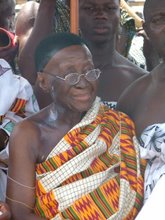
Otumfuo OseiTutu II who sat in state was adorned with gold ornament at almost all parts of the body, and crowned it with a beautiful native sandals to match.

He was at his usual best when it comes to traditional way of dressing, but it was President John Agyekum Kufour, who stole the show when he obliged the former Mayor of Kumasi, Okumkom Nana Akwasi Agyemang to a kete dance just before he left the durbar grounds.

It was Nana Akwasi, as he is popularly referred to in Kumasi, who initiated the move by teasing President Kufour to kete dance.

President Kufour was by then, bidding farewell to the numerous celebrants who had converged at the forecourt of the Manhyia Palace to take part in the Akwasidae celebration.

The May 6th, 2007, Akwasidae festival was unique, in that, it fell on the 57th birth day of Otumfuo Osei Tutu II, and also marked the 8th anniversary celebration of the enstoolment of the King on the Golden Stool.

It was therefore not surprising that Otumfuo Osei Tutu was adorned in gold ornaments to showcase the richness of the Asanteman kingdom in terms of gold to mark the great day.

As usual, President Kufour also appeared in kente cloth, with a beautiful native sandals to match and after participating in the event for over two hours where he presented Otumfuo Osei Tutu with assorted drinks, including schnapps, champagne and wine, he decided to bid farewell to the celebrants, and it was at that time that Nana Akwasi teased him to the kete dancing show.

For over five minutes, the two great sons of Asanteman treated the celebrants to unique kete dance. Their steps, hand signals, smiles which go with the dance and body signs proved the abundance of skills they had, and this brought many of the celebrants to their feet which added much flavour to the celebration.

Ten minutes after President Kufour left the scene, former President Jerry John Rawlings also appeared and took his seat.

His presence also added much colour to the already charged atmosphere, and a few minutes later, he also paid homage to Otumfuo by not only embracing the King, but also presented drinks to support the occasion.

Apart from dignitaries who attended the festival from neighbouring countries such as Cote d’ Ivoire, Nigeria and Burkina Faso among others, and paid homage to the Asantehene, a special delegation from Libya led by the Vice Chancellor of the Al Fateh University in Libya, Professor Salah M. Azwal, also participated in the celebration and presented some gifts to the Asantehene, Otumfuo Osei Tutu II.

Professor Azwal was led to the durbar grounds by the Vice Chancellor of the Kwame Nkrumah University of Science and Technology, Professor Kwasi Kwafo Adarkwa.

Some Chiefs, from Yamousukro who trace their lineage to Ghana , together with other Chiefs from various parts of the country, also joined Asanteman to celebrate the occasion .

Among the dignitaries who accompanied President Kufour were the Ashanti Regional Minister, Mr Emmanuel Asante Owusu Ansah, the Minister of Defence, Dr, Addo Kufour, the Minister of Finance, Mr Kwadwo Baah Wiredu, the Minister of Trade ,Industry and Presidential Special Initiatives, Mr Allan Kyeremanten and the Minister of Works and Housing, Mr Hackman Owusu Agyemang.

Others were, the Minister of Interior, Mr Albert Kan Dapaah, the Minister of Chieftaincy Affairs, Mr Sampson Kwaku Boafo, the Deputy Minister of the Ashanti Region, Mr Osei Asibey Antwi, the Mayor of Kumasi, Madam Patricia Appiagyei, Deputy Minister of Works and Housing and Madam Cecilia Abena Dapaah

The Chief Executive of the Korle Bu Teaching Hospital, Professor Kwabena Frimpong Boateng, The Chief Executive of Komfo Anokye Teaching Hospital, Dr Anthony Nsiah Asare, the Ashanti Regional Director of Health Services, Dr Kofi Asare , the Ashanti Regional Director of Education, Mrs Bellinder Serwaa Addo, also joined the Asanteman Kingdom to celebrate the unique Akwasidae festival.

Other dignitaries included the British High Commissioner to Ghana, HIs Excellency Gordon Wetherell and his American counterpart, as well as the Brazilian, Netherlands and Nigeria Ambassadors to Ghana.

As usual, the Paramount, Divisional and sub Chiefs of Asanteman were there in their numbers, and the various colours of their cloth, native sandals and umbrella brought home the rich cultural values of the kingdom.

Their dressing, especially the gold ornaments which adorned them, their turbans and the beads they wore among others, did not only add colour to the festival, but also proved the steadfastness that the present generation has held to the legacy that past generation has bestowed to us, as well as the manner the present generation is fusing the customs, traditional values and culture to the future generation.

By 10 am, all seats at the durbar grounds were filled up and the celebrants expectantly waited for Otumfuo Osei Tutu to arrive at the durbar grounds to take his seats to enable them pay homage and present their gifts as the occasion demanded.

President Kufour finally arrived at 11;50 am, and was treated to a rousing welcome as soon as he arrived in his rich kente cloth. He took time to go round to greet some of the dignitaries who had already taken their seat, and ten minute later, Otumfuo Osei Tutu , riding in a palanquin and bustling with life also arrived.

It was the Kete drummers who heralded the arrival of the Asantehene and his retinue onto the durbar grounds at 12 noon, and his arrival ignited life onto the grounds which was already busting.

In the palanquin, Otumfuo portrayed his skills in traditional dancing as he confidently responded to the kete drummers, which reached its climax when he reached the dais where President Kufour and other government officials were seated.

President Kufour responded by standing up and pointed his fore and middle fingers at the Asantehene to show his admiration for his dancing skills and his unflinching support for his reign.

The scene lasted for just over two minutes, but the message it portrayed was not only profound but memorable as well.

The presence of President John Agyekum Kufour and former President Jerry John Rawlings at different points of the day also became a topic of discussion among the celebrants.

While President Kufour, together with some Ministers of state and Parliamentarians arrived at the fore court of the Manhyia Palace where the festival was celebrated at 11; 50 am, former President Rawlings, together with Mr Daniel Ohene Agyekum, a former Ashanti Regional Minister, Mr Victor Smith, Special Aide to former President Rawlings, and Dr Stephen Opuni of the Komfo Anokye Teaching Hospital, arrived there a few minutes after President Kufour and some of his entourage had left the durbar grounds.

The presence of the two dignitaries at different points of the festival, was cheered by the chiefs and people of Asanteman who were participating in the Akwasidae festival.

The Bantamahene, Baffour Asare Owusu VI, the Paramount Chief of Tepa Traditional Area, Nana Adusei Atwerewa Ampem, the Chief of Apeadu, Odeefuo Owusu Amoaye, The Paramount Chief of Agogo Traditional Area, Nana Akuoko Sarpong, the Paramount Chief of Manso Nkwanta, Nana Bi- Kusi, the Paramount Chief of Asokore Traditional Area, Nana Susubribi Krobea Asante, as well as the Asokore Mamponghene, Nana Boakye Ansah Debrah,the Paramount Chief of Bechem traditional Area, Nana Ofosu Gyeabuo Akoto, were among the traditional rulers who joined the Asantehene to celebrate the festival.

The Editor of the Daily Graphic, Mr Yaw Boadu Ayeboafoh, the General Manager of the Ghana News Agency, Nana Appau Duah, as well as the Editorial Consultant of the News Times Corporation, Mr Ebo Quansah were also present.

Some Members of the Council of State including Professor John Nabila, were also present and fully participated in the festival.

Some Chiefs from Cote D Ivoire, and a delegation from the Benin State in Nigeria led by the Governor of the State ,also joined the Asantehene to celebrate the festival.

The clergy, which included the Arch Bishop of the Kumasi Catholic Diocese, Rt. Rev Peter Kwasi Sarpong, the Methodist Bishop of Kumasi, Nuben Abubakr, the Bishop of the Kumasi Anglican Diocese RT. Rev Oyinka Sarfo were not left out of the unique Akwasi festival celebration.

AS soon as the Asantehene arrived at the durbar grounds, he went round to greet the dignitaries, which included President Kufour and his entourage as well as the Paramount Chiefs of Asanteman, foreign dignitaries and a cross section of the public.

In the palanquin, Otumfuo Osei Tutu responded to the Fontomfrom and Kete drummers with a stylish dance which portrayed the rich culture and custom of Asanteman.

Just after he sat in state, President Kufour was led by the Ashanti Regional Minister, Mr E.A Owusu Ansah and the Mayor of Kumasi, Madam Patricia Appiagyei to pay homage to Otumfuo Osei Tutu and congratulated him on his 57th birthday celebration.

They also congratulated him on his eighth year reign as the occupant of the Golden Stool and wished him well on the Akwasidae festival celebration which attracted both local and foreign dignitaries.

It was at that point that the Ashanti Regional Minister presented the drinks.

The dignitaries who participated then took turns to pay homage to Otumfuo Osei Tutu and presented him with gifts and wished him well on his reign.

Just before President Kufour left the durbar grounds, he engaged the former Mayor of Kumasi, Nana Akwasi Agyeman to kete dancing, which attracted the dignitaries.

It was a few minutes after President Kufour left the place that former President Rawlings also arrived to greet the Asantehene, Otumfuo Osei Tutu II, and the dignitaries and later presented his gift to the Asantehene and wished him well on the celebration and God’s guidance on his reign as the Asantehene.

AHENSAN GETS A YOUTH CENTRE

THE Chinese Ambassador to Ghana, Mr Zhang Ke Yuan, has cut the sod for construction work to begin on a youth centre at Ahensan Estate in Kumasi.
The centre, which is being funded by the Chinese government at a cost of $1.3 million and is expected be completed in May next year, is designed to create an enabling environment for the youth to develop their potential more effectively.
It is being executed by Messrs Jiangsu Jiangdu, a construction company in China, and will have adequate facilities which will enhance indoor games and a multi-purpose conference centre for the youth in the metropolis in particular and other parts of the country in general.The construction of the centre is in line with the Chinese government’s foreign policy of collaborating more effectively with the government of Ghana by investing in the youth to enable them to develop their potential to the fullest.
In a speech, Mr Yuan said the Chinese government’s support to Ghana “is not a one-way traffic” because while China had been providing monetary support and technical expertise for Ghana in various sectors to boost its economy, Ghana had also been providing invaluable co-operation for China in the fields of bilateral relations and international co-operation.
“ We have been working hand in hand to develop our various economies and we will explore all avenues to support Ghana to reduce poverty among the populace to enable it to become a middle-income country in the near future,” he stressed.
He said it was through such relations that the government of China was supporting the construction of the Bui Dam at a cost of $600 million, in addition to the renovation of the National Theatre and other projects throughout the country.
Mr Yuan pointed out that the youth centre in Kumasi, which is the first of its kind in the country, was dear to the Chinese government and, therefore, urged the contractors to commit themselves to quality work for the benefit of the present and future generations.
In her welcoming address, the Kumasi Metropolitan Chief Executive, Madam Patricia Appiagyei, said the government initiated the National Youth Employment Programme (NYEP) as a way of exhibiting its commitment to the development of the youth.
She pointed out that the programme was now bearing fruits throughout the country and said in the Kumasi metropolis, for example, programmes in agriculture, community protection, waste and sanitation, as well as the rapid results revenue mobilisation and auxiliary health care, were being implemented.
According to Madam Appiagyei, 1,500 youths in the Kumasi metropolis had so far been engaged under the NYEP, while 1,000 more had also been screened to be recruited into various sectors where their services would be needed.
She said with the construction of the youth centre at Ahensan Estate, The Kumasi Metropolitan Assembly (KMA) would be providing the youth with a facility which would help them to harness their potential.
She commended the Chinese government for its invaluable support to Ghana and pointed out that such assistance was making it possible for the country to “achieve its goal of a holistic youth development”.
Madam Appiagyei also reiterated the need for the contractor to demonstrate a passion for quality work, timeliness and respect for the laws of the land, as spelt out under the agreement.
She assured the contractor that the assembly would not only be committed to the project to ensure its timely and smooth completion but also continue to support the National Youth Council and the youth in general to enable them to realise their God-given potential for national development.

Monday, May 07, 2007

KMA extends decongestion exercise to KNUST junction

Pictures show security personnel of the Kumasi Metropolitan Assembly (KMA) demolishing unauthorised structures that have sprung up at Ayigya along the main road from the KNUST junction towards the centre of Kumasi.
The KMA has intensified its decongestion exercise by extending it outside the central business district of the metropolis to other suburbs where unauthorised structures have sprung up along the roadside.
The assembly has earmarked about ¢1.1 billion for both the first and second phases of the decongestion exercise.
The exercise is meant to prevent traders from transacting business at unauthorised places in the metropolis and to remove all unauthorised structures from the ceremonial and ring roads and the railway lines in all parts of the metropolis.

The entire exercise started about a month ago.


POWER (ELECTRICITY) FROM GARBAGE - Kumasi takes the lead

THE construction of a plant to generate between 30 and 52 megawatts of electricity from garbage is under way in Kumasi.

President John Agyekum Kufuor performed the sod-cutting at the project site at the weekend.

The almost $136 million project is expected to generate energy from the Kumasi Metropolitan Assembly’s (KMA’s) landfill site at Oti to serve the Kumasi metropolis, depending on the volume of waste supplied to the landfill site per day. The gas from the waste materials will be used to generate energy.

The Kumasi metropolis currently generates about 1,000 tonnes of waste per day.

In November last year, the government, through the Ministry of Local Government, Rural Development and Environment, and the KMA signed a contract with the contractors, Cinergex Solutions Limited from Canada, for the construction of the plant.

Cinergex Solutions is the sole financier of the project, excluding Value Added Tax (VAT), and is expected to use 14 months to construct the plant, which is on a build-operate-and-transfer (BOT) basis.

Cinergex has consequently signed a power purchase agreement (PPA) with the Electricity Company of Ghana (ECG). The electricity produced by the waste-to-energy plant will supplement the ECG’s power supply from the Volta River Authority (VRA) for the Kumasi metropolis.

At the sod-cutting ceremony, President Kufuor said the government, through the Ministry of Local Government, Rural Development and Environment, would encourage other metropolitan and municipal assemblies which had the capacity and capability to explore the possibility of turning their waste into energy.

He said that was in fulfilment of the government’s desire not to rely solely on one power supply company but to open up the energy sector to others to create competition.

The energy to be generated by the plant depends greatly on the volume of waste supply to the landfill site and, according to experts, 500 tonnes of waste per day will generate 12 megawatts of electricity, 1,000 tonnes will produce between 30 and 52 megawatts of power, while 1,600 tonnes of waste per day will produce a maximum of 60 megawatts, which happens to be the maximum capacity of the plant.

President Kufuor said it would be prudent on the part of the KMA to liaise with other assemblies nearby to supplement and complement its waste requirements so that the plant could operate at full capacity.


He urged the KMA to strive to intensify its waste collection in order to provide enough raw materials for the plant.

“This is where your collaboration with the private sector comes on stream. Since the assembly alone cannot supply sufficient waste, the services of private companies should be sought,” the President said.

He stressed the need for people to have a positive attitude towards waste generation, saying, “Let us see waste as an economic resource. As such, let us stop littering the environment and rather separate waste into manageable components.”

President Kufuor said apart from helping the Kumasi metropolis with its sanitary challenges, the project would also provide jobs for young engineers and administrators and could again serve as an industrial training centre for Electrical Engineering students of the Kwame Nkrumah University of Science and Technology (KNUST), thereby serving as a source of transferring knowledge and skills to Ghanaians.

He said the current energy situation had affected every aspect of the economy, especially the manufacturing sector, adding that government would embrace projects such as the waste-to-energy programme to add to the energy requirement.

President Kufuor said the government would continue to pursue its policy of creating a congenial economic environment for both foreign direct investment and local entrepreneurship to flourish.


The Minister of Local Government, Rural Development and Environment, Mr Stephen Asamoah-Boateng, said the issue of waste collection and sanitation in general had been a major challenge for local authorities and that it was good news that energy could now be generated from waste in Ghana.

The KMA Chief Executive, Madam Patricia Appiagyei, said Kumasi had one of the best landfill sites in the West African sub-region and that it was good news that the site was going to be used to generate electricity.

She said the KMA would soon launch the city-wide waste collection levy.

Wednesday, May 02, 2007

Device to reduce fridge consumption of electricity developed in Kumasi

A Kumasi based electronics technician at the Suame Magazine, Mr Kwame Adjei Manu has developed an electronic device that is capable of reducing the domestic electricity consumption of refrigerators by half.

Known as “Fridge Timer”, the device when connected enables the fridge to automatically cut off electricity consumption at a prescribed time like the way a thermostat maintains a desired set point temperature in a system.

The fridge timer has been designed to automatically switch off and on electric power to the fridge at an interval of four hours helping to save about 50 percent of the energy consumption.

Samples of the device have since been given to the Ghana Standards Board (GSB) for trials and testing.

Speaking in an interview with the Daily Graphic in Kumasi, Mr Manu who is also the Managing Director of Amec Electronics at the Suame Magazine said research had proved that fridges were the highest consumer of domestic electricity supply due to their constant switch-on.

He said most people do not bother to switch off their fridges and that the fridge is always allowed to be switched on all the time except when there was a power outage.

He said research had also indicated that when a refrigerator is switch on for about four hours, the set point temperature amassed in it could be maintained for the next four hours whiles the fridge is switched off.

“Hence I decided to manufacture a device that would switch-on and off the fridge at a four hour interval so as to help save electricity consumption domestically.”

Mr Manu said the device, some of which had already been given to the Ghana Standards Board for trials and testing, was developed after a two-year intensive research work by him.

He said majority of the people in Ghana use second hand fridges most of which are faulty and have their thermostats not working at all, hence the Fridge Timer would help to reduce their energy consumption and safe them a lot of money.

A thermostat is a device for regulating the temperature of a system so that the system's temperature is maintained near a desired set point temperature. The thermostat does this by controlling the flow of heat energy into or out of the system. That is, the thermostat switches heating or cooling devices on or off as needed to maintain the correct temperature.

Mr Manu explained that the Fridge Timer allowed the fridge to cut off energy automatically for four hours before it re-starts power consumption, adding that, “at the end of the day, energy consumption of the fridges is reduced by 50 percent without reducing the temperature of the fridge”.

He said the device would not only help Ghanaians to conserve energy but also help reduce energy cost paid by consumers to the Electricity Company of Ghana (ECG).

“In these days of rising energy prices and corresponding energy crisis, people should be interested to see how their thermostat works but unfortunately most of the second refrigerators being imported into the country today have their thermostats not functioning”, he said.

The fridge timer is very useful for small domestic refrigeration, he said.

Mr Manu also said his company had also developed a DC-AC Invertor/Charger device, which served as alternative power supply during electricity outages.

He said the device could be used by the energy consumption appliances in the home for a period of 12 hours.

He appealed to Ghanaians to accept the devices in order to reduce energy consumption and electricity bills.

Monday, April 23, 2007

Accra zoo animals arrive in Kumasi zoo

All animals in the Accra Zoological Gardens have been transported to the Kumasi Zoo to make way for the construction of the new Presidential Complex at the Flagstaff House.
In the meantime, arrangements are underway for the construction of a new modern zoo at a place identified in the Achimota Forest in Accra.
According to Professor Dominic Fobih, Minister of Lands, Forestry and Mines, the transfer of the animals would in no way stall the plan for Accra to have a fitting zoo.
The new Accra Zoo is to be built within the next five years with the help of the London Zoological Society. The animals are expected to be transported back to Accra upon completion of the new zoo in Accra.
The transfer of the animals has, however, enriched the Kumasi Zoo in terms of animal stock, putting it in a position where it can appropriately offer recreational grounds for relaxation.
This is because it now boasts about 60 different animal species on display including lions, elephants, primates, reptiles and birds.
Hitherto, it had only about 37 different species of animals on display and had become a pale shadow losing its status as a major tourist attraction in the Garden City.
The Kumasi Metropolitan Assembly (KMA) has pledged to help improve facilities at the zoo, which includes walkways and access roads.
At a ceremony to officially welcome the animals to their new “home” in Kumasi, Prof. Fobih stressed the need for the public to patronise the zoo.
The minister says it is unfortunate that many Ghanaians do not seem to appreciate zoos as facilities among the very important assets of the country.
“Most people therefore do not consider visiting the zoo when planning their holidays or leisure times”, he noted.
Zoos are in most cases the only opportunity for urban dwellers to have first-hand experiences with wildlife.
Prof. Fobih notes further that despite the numerous benefits of zoos there is a wide gap between revenues accruing in the form of gate proceeds and the cost of maintaining the zoos, thus making it difficult to run and maintain them.
He said that despite such difficulties there was still the need to continue keeping the zoos for sustainable use of wildlife resources, conserving endangered animal species and researching for improvement in the management of various species of fauna across the globe.
He expressed appreciation to all stakeholders for ensuring the safe transportation of the animals to Kumasi and also extended a personal appreciation to President Kufuor and the Asantehene, Otumfuo Osei Tutu II, for their immense interest and support for the zoo so far.
He appealed to other stakeholders including traditional authorities and corporate bodies to support the Kumasi Zoo so that it could deliver its expected benefits.
The Kumasi Zoo was established in 1957 by Dr A.A.Y. Kyeremanteng who also founded the Kumasi Cultural Centre.
The Cultural Centre was set up to create a venue for the reinforcement of Akan culture among the youth. Another popular activity at the centre was the telling of Ananse stories.
Thus the zoo was a natural extension of the activities of the centre because young people could go to the zoo to see the very animals they were hearing about in the Ananse stories.
The Accra Zoo was set up by the first President of Ghana, Dr Kwame Nkrumah, as a private menagerie in the early 1960s. The Accra Zoo was opened to the public after his overthrow in 1966.

Sofoline traffic congestion to go away

The 10.3 Komfo Anokye Teaching Hospital- Abuakwa single lane carriageway corridor of the main Kumasi- Sunyani road, considered to be one of the most congested in the Kumasi Metropolis, in terms of vehicular traffic, has now been redesigned to be reconstructed into an asphaltic concrete surface dual carriageway.
The project, estimated at ¢732 billion, ($80 million) and being executed by a Chinese construction firm - Messrs China Geo Engineering corporation, would begin in June this year.
It would be supervised by ABP Consulting Engineers from Ghana, and among the facilities that would be provided to curb the spate of accidents associated on the road, most of which claim life and property, are bicycle lanes and pedestrian walkways. According to the Acting Minister of Transportation, Hon. Felix Owusu Agyepong, the reconstruction of the KATH- Abuakwa road would involve five main components, mainly- the widening of the road from KATH to Abuakwa, the construction of an interchange at KATH and Sofoline, as well as the construction of five underpass bridges along the road and the landscaping of the entire road network.
Giving details of the project during the sod cutting ceremony last Saturday in Kumasi at the weekend, Mr Owusu Adjapong pointed out that the widening of the KATH -Abuakwa road would involve the entire 10.3 KATH -Abuakwa road which also links Kumasi to the Brong Ahafo and Western regions.
Ã’ The section from KATH to Sofoline roundabout which is about 2 kilometres, will be a three lane dual carriageway, with the remaining 8.3 kilometres widened into a two lane dial carriageway, he explained.
Explaining further, he said Ã’ there will be an interchange at the present Sofoline roundabout. This will ensure free flow of traffic at the location, which is currently one of the traffic bottlenecks in the city. He said a second two level interchange to control vehicular traffic movement would also be constructed at the present KATH roundabout, while five underpass bridges would be developed at the UCEW K, IPT, Agric College, Apatrapa and South Suntreso junctions to facilitate the smooth flow of vehicular traffic at that section of the Kumasi Metropolis.
The project will ensure that traffic will be separated at these five major junctions which have been traffic bottlenecks, he stressed, adding Ã’ Traffic from the minor roads will be routed under the Sunyani road through underpass bridges
Stressing further, the Transportation Minister said Ã’ The project we are launching today will cater for the landscaping of all road medians and selected open spaces abutting the road and within the interchange loops.
He expressed concern about the inadequate infrastructural development, including road network in Kumasi, and pointed out that, the absence of such facilities have undermined the economic development in the metropolis .
He therefore assured that the government would initiate the necessary programmes that would reduce traffic congestion in Kumasi to facilitate the free movement of goods, services and persons
Mr Owusu Adjapong also hinted that apart from the KATH-Abuakwa road, the government would develop the main arterial roads at Antoa, Kampong, Offinso, Barekese, Sunyani, New and Old Bekwai as well as the Lake Road which converge at Kumasi.
These roads are connected by the ring road which serves as the wheel, however, there is lack of fluidity and connectivity in the flow of traffic due to the bottlenecks at some intersections, including those of Oforikrom, Asafo market, Asokwa, Santasi roundabout, Sofoline roundabout and Suame roundaboutÓ, he explained.
Adding he said, there are also some missing links of the road network like that of the Oforikrom-Asokwa-Ahodwo and Sofoline link road, and stated that, the delay in developing the link roads are undermining the smooth flow of vehicular traffic in the metropolis.
He said by providing the requisite infrastructure in Kumasi, the Metropolis would be able to play its role as a modern city which is not only strategically located to enhance business transactions, but also a centre of vibrant economic, cultural, tourist and political activities in the country.
Earlier in his welcoming address, the Ashanti Regional Minister, Mr Emmanuel Owusu Ansah, said the government was committed in developing the road network in Kumasi and would not leave any stone unturned to make the government realise its objective.
He expressed concern about the undue delay of the Asafo interchange, which he said had affected the socio-economic development of the metropolis.
He said unlike the Asafo interchange, the KATH-Abuakwa road would be completed on schedule and urged residents to cooperate with the construction firm executing the project to enhance its early completion.

The energy crisis

In Kumasi the electricity load management and an unpredictable energy supply is putting constraints on businesses, social activities and industry. Economic activities as well as social ones have greatly weakened with the onset of the load shedding management particularly the new two-day lights out rotation. There has been a notable decline in the activities of businesses, which rely greatly on electricity for their productivity. Cold store operators seem the hardest hit among many enterprises. Many businessmen have expressed concern about the current load shedding exercise saying it has greatly offset their economic gains and have decried the effects of the current crisis. This is because they are unable to get the required power supply to be able to go about their activities. Madam Akua Gyamfua, Manager of Gyamfua Cold Store at Asafo, producers of ice blocks told the Daily Graphic that she requires a 24-hour continuous supply of power to be able to produce one set of ice block. “Prior to the load shedding we were producing ice blocks on daily basis but we currently produce at two to three days intervals and even with that the blocks come out not well caked because of intermittent outages apart from the normal load shedding”, she said. Painting a small snapshot on the problem, Madam Jane Amoah of Obibi Cold Store at Asafo claimed products in their cold storage especially fish have been going bad day in day out because of the interruptions in power supply. She said she recently had to change the motors of many refrigerators in her cold store because they had been damaged by the power outages and also had to purchase an unbudgeted for stabilisers at the cost of about ¢10million. Public protests continue to mount in many areas in Kumasi as the solutions to the energy problem seem not to be coming soon enough. Residents in areas such as Kentikrono, Oduom, Ayeduase, the Kwame Nkrumah University of Science and Technology (KNUST) campus and its surrounding areas and Ejisu-Krapa apart from struggling with the new two-day lights out rotation have been experiencing outages irregularly. Pupils and students in basic and tertiary institutions in those areas are being denied electricity for their studies. A primary six pupil at the St Experimental Primary School, Ms Diana Ama Pokuaa expressed concern about the trading of accusations and counter-accusations on the crisis and said that would not help find a solution to the problem. She said she has been listening to the accusations and counter accusations on radio. “The current power crisis was a real crisis for the people of Ghana” Mr Edwin Agyapong, Managing Director of Computer Processing Centre (CPC) in Kumasi (CPC) told the Daily Graphic. According to him the effects of the energy crisis was gradually surpassing the pressures of crude oil prices and said the economic cost of the energy crisis to his company was almost impossible to quantify and expressed the hope that the government would through its promises act appropriately on it. “It is very expensive running generators for our operations and even with that the generators are not able to power most of the equipment we use in our operations”, Mr Agyapong said. He said he has lost many of the clients at his Internet Cafe and said the problem was even worse when he was trying to link up with other partners in Accra and other areas through fax or e-mail only to realise that those areas have outages. The irony is that when they have light on, you also have light off so it makes it impossible to communicate as a result deals that should take minutes to accomplish takes days to accomplish, he said. Mr Agyapong called for a constructive discourse within government, within the energy sector and by the public, on what can be learned from this unfortunate experience, and how to avoid this level of crisis-point ever being reached again. Madam Mary Owusu Bonsu, a nurse at the Komfo Anokye Teaching Hospital called for a serious attention on the government’s medium and long term energy solutions, which include the construction of the Bui Dam with support from the Chinese government. On the part of the Electricity Company of Ghana (ECG), Mr William Boateng, the Regional Public Relations Officer explained that certain areas in the Kumasi metropolis have been experiencing irregular outages as a result of cable faults during normal outages and unannounced outages from the Volta River Authority (VRA). He said cable theft during power outages has also aggravated the problem of irregular outages. He said the entire Ashanti region requires 135 megawatts but has been shedding 35 of it in the load management and added that the VRA sometimes in an unannounced manner knocks off 20 megawatts resulting in the irregular outages. Mr Boateng said many of the gadgets of the ECG currently needs to be replaced because they have been affected by the frequent outages since they were not designed to withstand such outages.

Recalcitrant traders fined in Kumasi

A Kumasi Circuit Court has imposed fines totaling ¢13 million on 26 traders who returned to the Kumasi central business district to transact business in violation of the Kumasi Metropolitan Assembly’s (KMA) directives.
The court presided over by Mr. Justice Owusu Afriyie warned that it would not hesitate to impose custodial sentences in addition to the imposition of heavy fines on recalcitrant traders.
The Kumasi Divisional Police Crime Officer, Mr Kwaku Duah who briefed the media about the incident said each of the traders was fined ¢500, 000, or serve three months prison term when they appeared before the court last week.
He said the traders were arraigned before the court after they returned to the CBD to transact business against KMA directives.
According to Mr Duah, the 26 traders were among 54 traders who were arrested for committing similar offences and pleaded guilty to the offence of transacting business at unauthorized places.
He said the others would also be arraigned before the court after police finish with their investigations.
He said apart from the CBD where traders have been banned from transacting any business, they have also been banned from transacting business at the Morocco Shoe House area as well as the Dr Mensah area in the metropolis where their activities always created human and vehicular congestion.
Three weeks ago, the KMA ejected the traders from the CBD and threatened to arrest those who returned to the area for any business transactions.
A Task force of 80 personnel, involving the Police, Prison officers and KMA guards among others, was established to monitor the area to ward off any trader who returned to transact business there.
As part of his tour to some project sites in the metropolis two weeks ago, the Acanthine, Otumfuo Osei Tutu II also visited the CBD and commended the KMA for their bold decision of ejecting the traders from the CBD.
He expressed concern about the activities of traders at the CBD, which he said, has created much nuisance in the metropolis, and therefore urged the affected traders to comply with the KMA directives and source for alternative places to transact business.
Explaining, he said, respecting the KMA directives would not only create sanity at the CBD and boost business, but would also create conducive atmosphere for motorists thereby reducing the spate of accidents associated at the CBD as a result of the activities of the traders.

Kumasi Metropolis to benefit from Millennium Cities Initiative

Kumasi Metropolis is among seven cities in sub-Saharan Africa to benefit from the African Millennium Cities Initiative (MCI) project being implemented by the Earth Institute at Columbia University.
The project will initially focus on policy analysis impacting foreign direct investment with a view to creating employment, stimulating local and domestic enterprises development and fostering socio-economic growth.
Briefing newsmen on the benefits of the project, in Kumasi at the weekend, Nana Asante Frempong, Vice Chairman of the Ashanti Regional branch of the Association of Ghana Industries (AGI), and the Managing Director of Wonoo Ventures, said in addition to foreign direct investment, the MCI would promote an integrated City Development Strategy (CDS).
He hinted that the other MCI cities were Kisumu in Kenya, Blantyre in Malawi, Akure, Nigeria, Bamako and Segou, both in Mali and Louga in Senegal and that the cities would draw upon and strengthen the Millennium Development Goals already underway by adding focused urban-based components.
Nana Asante Frempong, who is also the immediate past chairman of the Parliamentary Select Committee on Trade, Industry and Tourism, said attracting foreign direct investment to sub-Saharan Africa was difficult.
He, however, said fortunately, new opportunities to attract direct investment had been made possible due to good governance and economic policies in the sub-region and other possibilities offered by effective development mechanisms and commitment of donor resources to upgrade African infrastructure.
Nana Frempong who was once the Member of Parliament (MP) for Kwabre, indicated that the major initial goal of the MCI was to build on these favourable trends and provide research-based policy analysis to help turn them into substantially increased flows of foreign direct investments.
Nana Frempong pointed out that the MCI would co-operate with other international organisations to bring the attention of international investors to the seven regional scale cities close to the Millennium Villages.
He added that these cities were important in that they were already sizeable, growing rapidly and represented the best chance for balanced industrialisation.
Nana Frempong said an advisory board consisting of recognised business leaders was being formed to provide technical and business strategies to move the MCI project forward.
He called on all business communities and individuals with business proposals to liaise and collaborate with the AGI in order to benefit from the MCI.
GNA

Monday, April 16, 2007

KMA determined to sustain decongestion exercise in Kumasi

THE Kumasi Metropolitan Assembly (KMA) has intensified efforts to sustain the decongestion exercise it undertook at the central business district (CBD) of Adum and the streets at the Kajetia and Central markets three weeks ago.

The KMA has deployed 80 prison and police officers and metropolitan guards and officers from the Mental AIDS Foundation to maintain sanity in those areas.

The traders were ejected from the streets in line with the KMA’ determination to decongest the streets and pavements of the CBD, Kajetia and Central markets to enhance free pedestrian and vehicular movement.

About three years ago, the KMA commenced a similar exercise to eject hawkers and petty traders from the pavements and streets of the CBD but the traders returned to the streets two weeks later, negating the whole exercise.

Prior to their return, the traders caused a stir in Kumasi by taking to the streets and converging at the Ashanti Regional Co-ordinating Council, urging the then Ashanti Regional Minister, Mr Sampson Kwaku , to intervene to enable them return to the streets to transact business.

The traders contended that the KMA did not earmark any area for them to transact their businesses before ejecting them and, therefore, appealed to the regional administration to intervene, threatening to boycott future elections if their requests were not met.

The traders also succeeded in winning public sympathy and, therefore, returned to the streets a few days after the earlier decongestion exercise.

Their action made some residents criticise the KMA for what they described as inactivity and negligence.

Consequently, when the assembly embarked on the recent exercise, the chorus among some of the affected traders in Kumasi was the usual “ we will soon return to the streets as soon as the tempo of the KMA cools down, to continue business”.

The view of the public is that the KMA should sustain the exercise. A number of people interviewed said “ it is too risky for commuters to use the principal streets in the metropolis as a result of the commercial activities on the main pavements and parts of the streets, especially at the CBD”.

The Kumasi-Takoradi Chairman of the Ghana Private Road Transport Union (GPRTU), Alhaji Sumaila Boache, also told the Daily Graphic that the KMA had been too lenient with the traders by allowing them to transact business on the streets.

He said while the KMA was eager to arrest and prosecute offending drivers who flout traffic regulations, they were reluctant to punish traders who take the laws into their hands.

On her part, a 30-year-old trader, Ms Cynthia Asante, who was affected by the exercise said notwithstanding her predicament, the KMA should continue with the exercise “ because it has brought sanity into the streets of Kumasi and reduced the risk of sharing the streets with vehicles”.

She said she was forced to do business in the streets to earn a living but with the present situation, it was important for her to relocate.

“ The exercise should not become a nine-day wonder as it was with the previous exercises” she said, adding “ It is time the KMA implements its decisions dispassionately to enable citizens live up to their civic responsibilities”.

According to Ms Asante, the KMA should continue to deploy some officers on the road to educate the public on the need to use the pavements instead of using the roads as a walkway.

She, however, urged the KMA to respond to the needs of some of the affected traders by developing the Race Course area to resettle the affected traders.

Explaining, she said when the KMA started the ejection exercise a few years ago, they gave the assurance that the Race Course area would be developed to enable some of the affected traders move there for their business transactions and prevent them from returning to the main pavements and streets “ but to date, nothing has been done”.

“ The place is too muddy, bushy and unhygienic for any business transactions, so my plea is that the KMA should develop the area to enable some of us move there to make a living”, she pleaded.

When the Asantehene, Otumfuo Osei Tutu II, toured some project sites in Kumasi last week, he took time to inspect the streets and commended the KMA for “ bringing sanity into the CBD”.

Advising the affected traders, Otumfuo Osei Tutu said “ there is no need for you to play politics with this exercise because your actions have brought much congestion and problems in Kumasi, and the time has come for you to respect the orders of the KMA to bring sanity into Kumasi.

He said customers would follow the traders wherever they went to transact business with them, stressing that their absence from the streets would enhance the beautification exercise currently underway in the metropolis.

Speaking to the Daily Graphic, the Public Relations Officer of the KMA, Mrs Jemima Nancy Asare, said at the moment, the KMA was spending ¢50, 000 a day on each of the 80 officers who were monitoring the area.

“ They are doing a good job of maintaining law and order, so we are not worried about spending ¢50, 000 a day to maintain them on the streets and pavement”, she noted, adding, “ they were brought there principally to prevent any of the traders from returning to the area for business, and so far, they have done an excellent job.

Mrs Asare said since the exercise started, about 30 traders who flouted the KMA’s orders and decided to return to the streets and pavements to do business had been arrested.

“ They are being prosecuted to serve as deterrent to others”, she said, adding “ under no circumstance would we allow ­the traders to return to the pavements and streets to cause any congestion”.

She noted further that special courts had already been prepared to deal with recalcitrant traders­­ and advised the affected traders to relocate to Bantama, Asafo Market, Patase Estate, Kwadaso Estate and Amakom Market where some areas had been developed for them.

Concerns Raised Over Joint Circulation of Currency

Public concern about the joint circulation of existing and the new Ghana cedi for a period of six months appears to be rife with less than three months to the introduction of the new currency.
While some are expressing misgivings about the feasibility of the joint circulation, others believe the situation will provide fertile grounds for the less educated to be exploited. These concerns emanated from a series of sensitisation programmes organized by the Asante-Akim South District Directorate of the National Commission for Civic Education (NCCE) on the re-denomination of the existing currency.
Dominant among the varied questions thrown to the NCCE officials during the programmes was the joint circulation, which many believed would be difficult to comprehend, especially among market women. They argued that the general understanding of the new currency by the masses was a major challenge on its own hence circulating it alongside the existing currency could only aggravate the situation. The cynics have therefore advocated an extension of the date of the commencement of the re-denomination to make way for adequate public education to ensure a smooth take-off.
Mr Lawrence Tweneboah-Kodua, Senior Field Officer at the District Directorate of the NCCE, who addressed one of such programmes at Juaso, said prices of commodities would be quoted in both currencies within the six-month period hence it would be easy for people to convert their monies. He cautioned the public not to engage middlemen when exchanging their currencies, adding that such transactions must be done only at the banks.

Mr Tweneboah-Kodua urged the people to embrace the re-denomination exercise since it was to the benefit of the entire nation and entreated the public to handle the new currency with care.

Source: GNA

Sunday, April 08, 2007

Asantehene inspects development projects in Kumasi

The Asantehene, Otumfuo Osei Tutu II last Thursday stepped out to inspect a number of ongoing development projects under construction in Kumasi and threw his support for the Kumasi Metropolitan Assembly (KMA) in the ongoing decongestion exercise of the Central Business District (CBD).
The Asantehene said it was improper for traders to take over pedestrian walkways and streets to do business and urged them to move away from the streets.
He said the satellite markets were there and that the traders should relocate there and stop playing politics with the entire exercise.
“We need to support it and stop people from doing business on streets and pedestrian walkways”, he said.
The King’s inspection tour which took him to project sites at the Kumasi Sports Stadium, Asafo Interchange, City Hotel, the Jubilee Park and the Affordable Housing at Asokore Mampong was greeted with thunderous appellations from residents of the metropolis, coming in the wake of rumours that the King had passed on to his ancestors.


Otumfuo also went to the Central Business District (CBD) to have first hand information on the decongestion exercise currently being undertaken by the KMA.
The city of Kumasi went gay on Thursday morning as the Asantehene waved back at the large and happy crowd that followed his entourage and sang appellations.
The crowd waved and shouted ‘Nana o! Nana o!’ as he moved from one project to the other.
In spite of persistent denials of his death from the Manhyia Palace, many were those who had convictions that the King had really passed on to his ancestors.
An early morning downpour on Thursday that threatened to postpone the planned tour of projects only helped to mystify the rumour.
The tour was the first outing of the King after the Independence Parade of March 6 at the Paa Joe Park at Kwame Nkrumah University of Science and Technology (KNUST).
The King’s entourage, which included the Ashanti Regional Minister Mr E.A. Owusu-Ansah, the Metropolitan Chief Executive, Madam Patricia Appiagyei, chiefs from Manhyia as well as a large media presence stepped out for the inspection at 11am on Thursday.
He first visited the SAT area at Kejetia to observe progress made on the decongestion exercise followed by the City Hotel, Asafo Interchange, Baba Yara Sports Stadium, Jubilee Park and Affordable Housing project at Asokore Mampong.
Contractors at the City Hotel refurbishment project, China Hualong State Corporation assured the Asantehene that they would complete and hand over the project by December, while those working on the Interchange said they would finally finish by end of June 2007.
The Asantehene advised the contractors to ensure that the project was devoid of any structural defects since the people have gone through a lot of inconvenience with traffic congestion as the project drags on.
Astonished by the progress of work at the Kumasi Stadium upon entering the inner perimeter and seeing the beautiful green grass, which was only three weeks old, the Asantehene exclaimed, “Oh Stephano! Thank you very much, that is a good work you have done here”.
This was in apparent reference to the Managing Director of Consar Limited, Mr Stephano Ramalla, contractors undertaking the stadium project.
The Stadium project is 65 percent complete and the contractors have promised to finish on time.
Speaking to the media after the tour, the Asantehene said there was the need for local Ghanaians working with the foreign contractors to take advantage of technology transfer and tap the knowledge of the foreign contractors and don’t allow them to go away with all of them.
He said he was happy that the Asafo Interchange for instance was finally going to be completed and commissioned by July.

Thursday, April 05, 2007

Otumfuo inspects development projects in Kumasi

Kumasi, the Ashanti Regional capital went gay on Thursday morning when the Asantehene, Otumfuo Osei Tutu II stepped out to inspect a number of projects under construction.
The King, widely rumoured to have died for about a fortnight now, waved back at a large, satisfied crowd that followed his entourage and sang his appellations.
In spite of persistent denials of his death from his Manhyia Palace, many had held on to their own convictions, and an early morning downpour that threatened to postpone the planned tour of projects only helped to mystify the rumour.But at about 11am, the Otumfuo and his entourage, including the Regional Minister E.A. Owusu-Ansah and the Metropolitan CEO, Madam Patricia Appiagyei as well as a large media presence, stepped out for the inspection.The tour is his first outing after the Independence Parade of 6th March.
He visited the centre of the city to observe progress made on the Kejetia/Adum decongestion exercise, the Baba Yara Sports Stadium, the City Hotel Complex refurbishment and the Asafo Interchange.
Contractors at the City Hotel refurbishment project assured the Otumfuo that they would complete and hand over the project by December, while those working on the Interchange asked for yet another extension to complete the job by June.
Otumfuo advised them to ensure the project is devoid of any structural defects since the people have gone through a lot of inconvenience while the project, two years behind schedule, has drags on.The crowds waved and shouted ‘Nana o! Nana o!’ as he moved from one project to the other.
The Otumfuo completed his tour at the Government of Ghana Affordable Housing Project site at Asokore Mampong.

Wednesday, April 04, 2007

KMA signs MOU with KNUST to solve development problems in Kumasi

THE Kumasi Metropolitan Assembly (KMA) has signed a memorandum of understanding (MOU) with the Kwame Nkrumah University of Science and Technology (KNUST) to establish a formal collaboration which will promote joint projects aimed at solving the development problems of the city of Kumasi.
Under the five-year agreement, KNUST is to provide technical support for the preparation and implementation of the City Development Strategy Programme which will cover infrastructure, tourism, local economic development, revenue generation and sanitation.
The two parties do not intend to enter into any contract which will create legal and financial obligations between them under the MOU but to facilitate and develop genuine and mutually beneficial programmes and activities.
The Vice-Chancellor of KNUST, Prof K. K. Adarkwa, and the Kumasi Metropolitan Chief Executive, Madam Patricia Appiagyei, appended their signatures to the MOU in Kumasi on Wednesday.
Under the agreement, the KMA is to collaborate with KNUST in the introduction of a new Master’s degree programme in Urban Management aimed at helping to build the capacity of the KMA in the management of the metropolis.
Madam Appiagyei described the collaboration between the two institutions as long overdue.
“I believe this is one of the best and finest universities in the sub-region and even beyond and it is a step in the right direction that this institution is being made to have an impact on the development of the city of Kumasi,” she said.
She said Kumasi used to be known as the Garden City of West Africa, saying that if the city was to regain its past glory, then KNUST had a vital role to play.
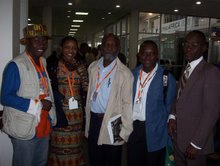
“I must say that it is not by chance that KNUST is located in the city. It is by design and it is, indeed, strategic. The time has come for us to feel and acknowledge the impact and presence of the university in the city,” she said.
She acknowledged that there had been previous arrangements between the KMA and KNUST which, for one reason or another, did not work.
“This time round, let us work hard at this collaboration, cut out all the bureaucratic tendencies which will hinder the establishment of the linkages and let us work at a faster pace,” the Metro Chief Executive said.
As part of a programme to beautify the city of Kumasi, the KMA last year set out to redevelop its 10 existing roundabouts through private sector participation and as of now all the roundabouts have been adopted by corporate bodies.
The development work to be undertaken by the corporate bodies includes horticultural work and the installation of imposing edifices.
Apaet from the roundabouts, there are several leisure parks dotted all over the city which need to be worked upon as part of the beautification programme and it is in these areas that the technical assistance and involvement of KNUST will be greatly required.
Madam Appiagyei said it was the expectation that the city in which the university associated with science and technology was located should be well laid out, beautiful and must not be found wanting in the area of development.
“Posterity will not forgive us if this collaboration is stifled,” she said.
She, therefore, challenged KNUST to bring its skills and expertise, research findings and the relevant projects it had undertaken to bear on the development of the city of Kumasi. Other areas to be tackled by the KMA under the MOU are the provision of logistical support within its means for KNUST in its research activities, the consideration of the creation of a Chair in Urban Management at KNUST, the opening up of facilities to staff and students of KNUST for purposes of carrying out research, and accepting students from KNUST for vacation training in its facilities.
The KNUST on the other hand is to support the KMA in initiating and executing projects aimed at revitalising the Central Business District (CBD) of Kumasi with particular reference to Kejetia, assist in the management of the city through provision of technical support, carry out research which would anticipate the problems of the metropolis and advise on possible solutions.
Other areas include making available to the KMA existing data in the form of plans, students’ theses, staff research reports as may be required by the KMA, help the KMA to plan and execute policies aimed at protecting the water bodies in the metropolis within the context of achieving the general ornamental development of the metropolis.
The KNUST is also to introduce programmes aimed at re-training middle level personnel of KMA in the requisite skills and competencies, introduce programmes aimed at providing continuing professional development of staff of KMA, provide priority to qualified KMA staff who wish to enrol on graduate programmes and encourage its students to sensitise the general public to issues of sanitation and development control through the organisation of seminars and workshops.